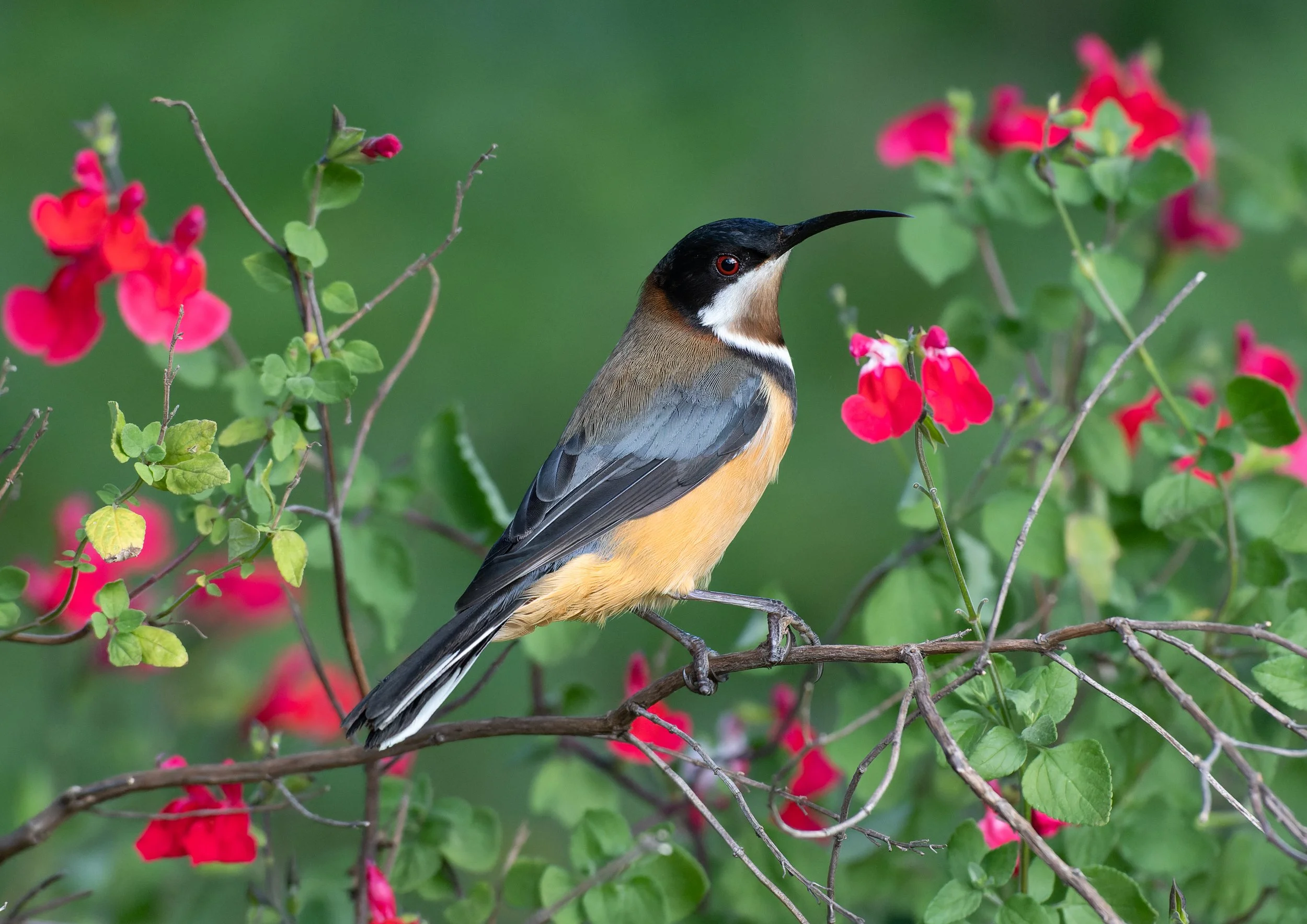
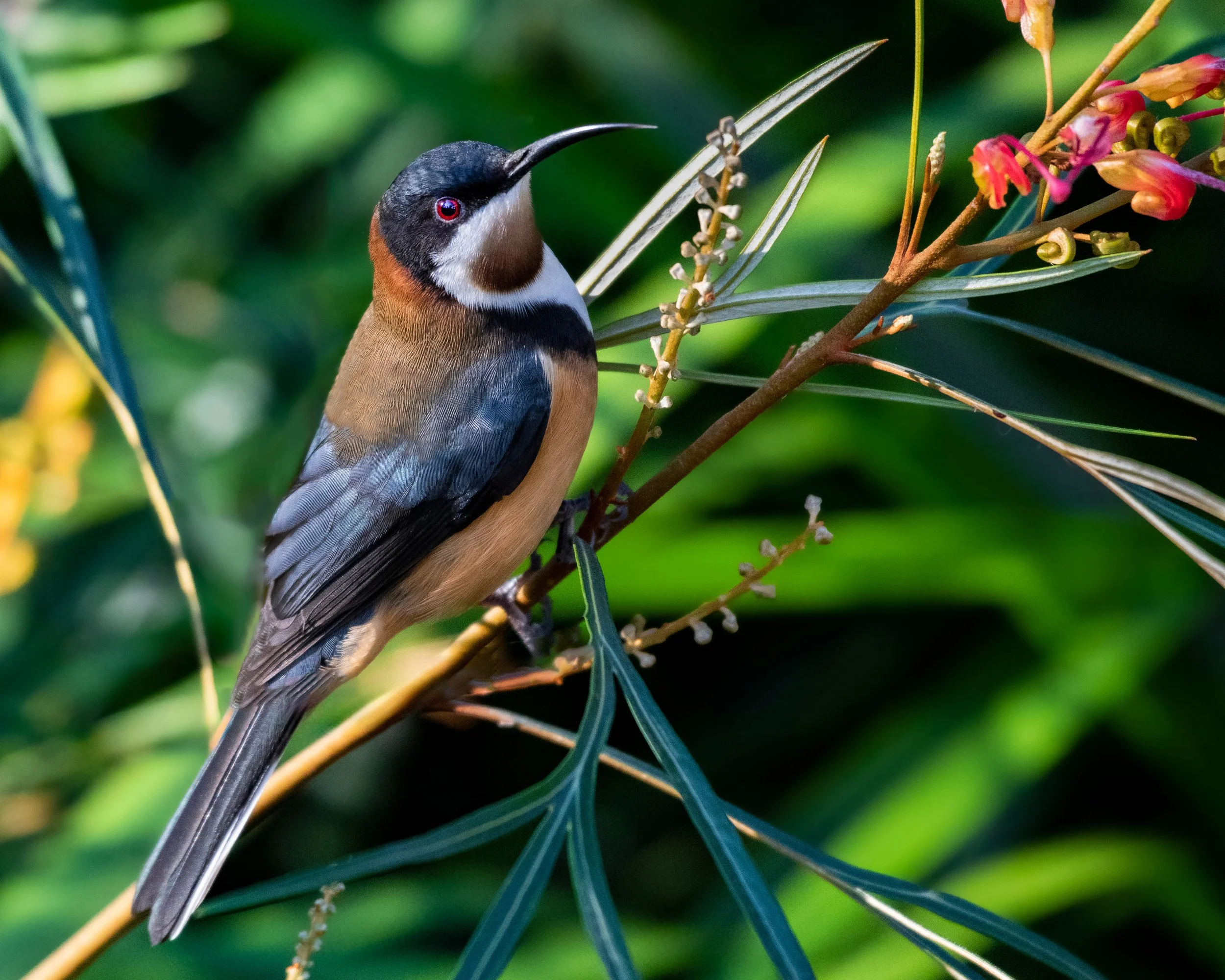
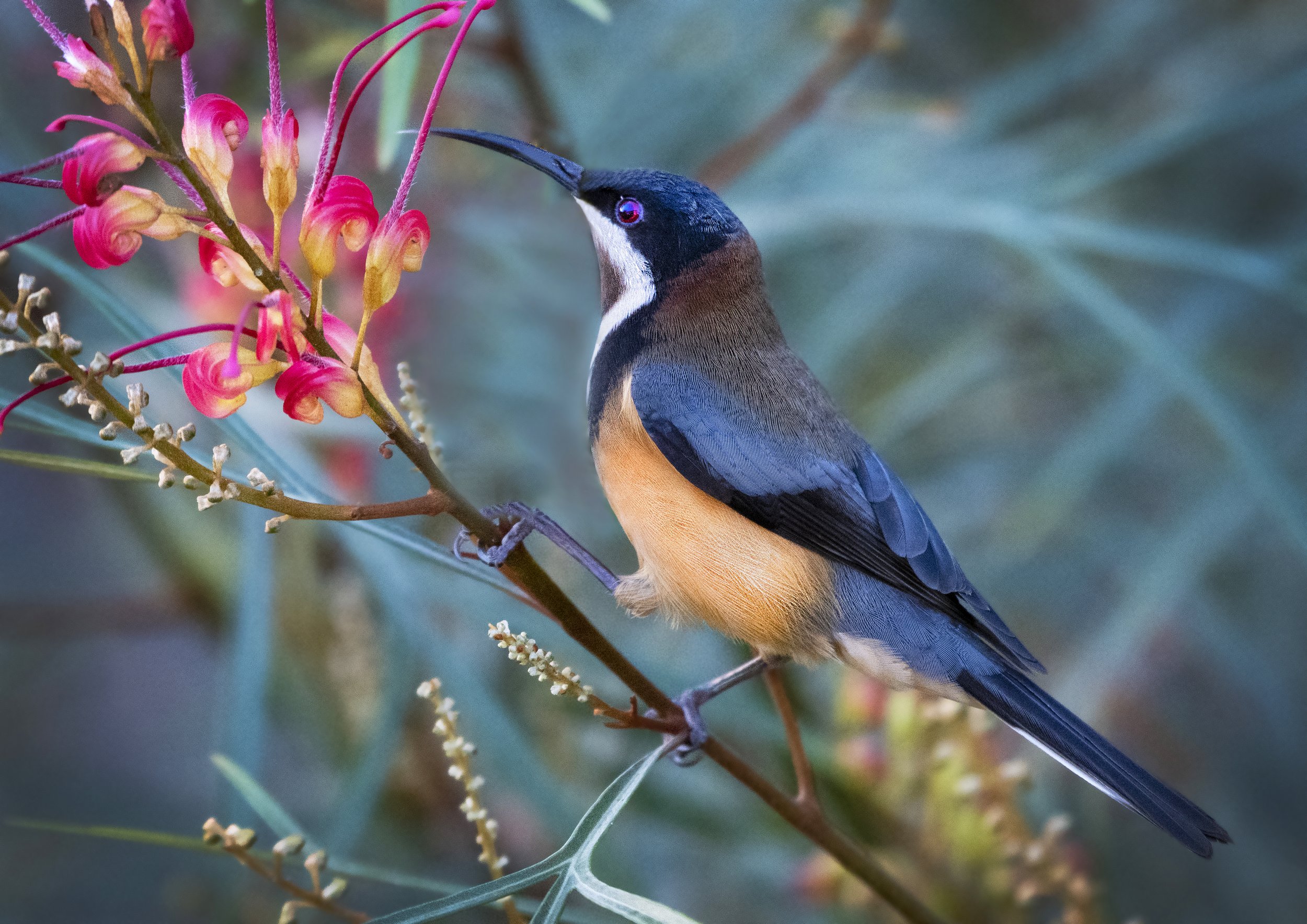
The Eastern Spinebill is a small, energetic honeyeater known for its slender, curved bill and striking plumage, found along Australia's eastern and southeastern forests and gardens.
This agile bird, Acanthorhynchus tenuirostris, measures around 15 cm and features a long down-curved bill ideal for sipping nectar from tubular flowers like grevilleas and epacrids. Males sport a black crown, white throat with a rufous patch, and cinnamon underparts, while females are slightly duller in tone. Eastern Spinebills are commonly seen darting through eucalypt forests, heathlands, and suburban gardens from Queensland to Tasmania, often hovering like hummingbirds as they feed. Their diet includes nectar and flying insects, and they play a vital role in pollination. Nesting involves a delicate cup of twigs and spiderwebs built by the female, who incubates the eggs while both parents feed the young. Their high-pitched "chip-chip-chip" call adds a lively soundtrack to the bush, making them a cherished sight for birdwatchers across the region.